Making flats work again
Flats get people started, and the housing system only works if people can move on. The Chancellor should make flats part of his Budget on 28 October.
Martin Woodhouse, Director
Flats are where most of us start. A first flat is close to work, affordable to heat and sized for one or two people. In our cities, flats increasingly need to be family homes too. The housing system depends on people moving on, from a first flat to a family home and eventually to a home for later life. Each move frees a home for someone else.
That chain is now stuck at both ends. Prices have risen too far, and stamp duty adds tens of thousands of pounds to every move. People who do not believe they can sell a flat and move on do not buy one. They rent for longer and wait for the home they want, but that home is expensive, in short supply and not being built.
People who do not believe they can sell a flat and move on do not buy one.
Flats are having a bad time
Flat prices have fallen far behind houses. Over the last 10 years a typical flat has risen in price by 18%, less than half the 41% rise for terraced houses. In London, flats now sell for less per square metre than in 2017, while terraced houses have risen by 40%. That is a real-terms fall in the value of a London flat of close to 30%. The pattern is national. In Manchester, one of the strongest markets in the country, flat prices fell last year while house prices rose.
Our work with the Camden Housing Taskforce and the London housing coalition shows why. The cladding crisis trapped owners in homes they could not sell. Many who bought near the peak are in negative equity. Service charges are high and unpredictable, and lockdown in a small flat left a lasting impression on a generation of buyers. Each bad experience is shared, and negative sentiment feeds on itself. When flats stop selling, the first rung of the ladder disappears.
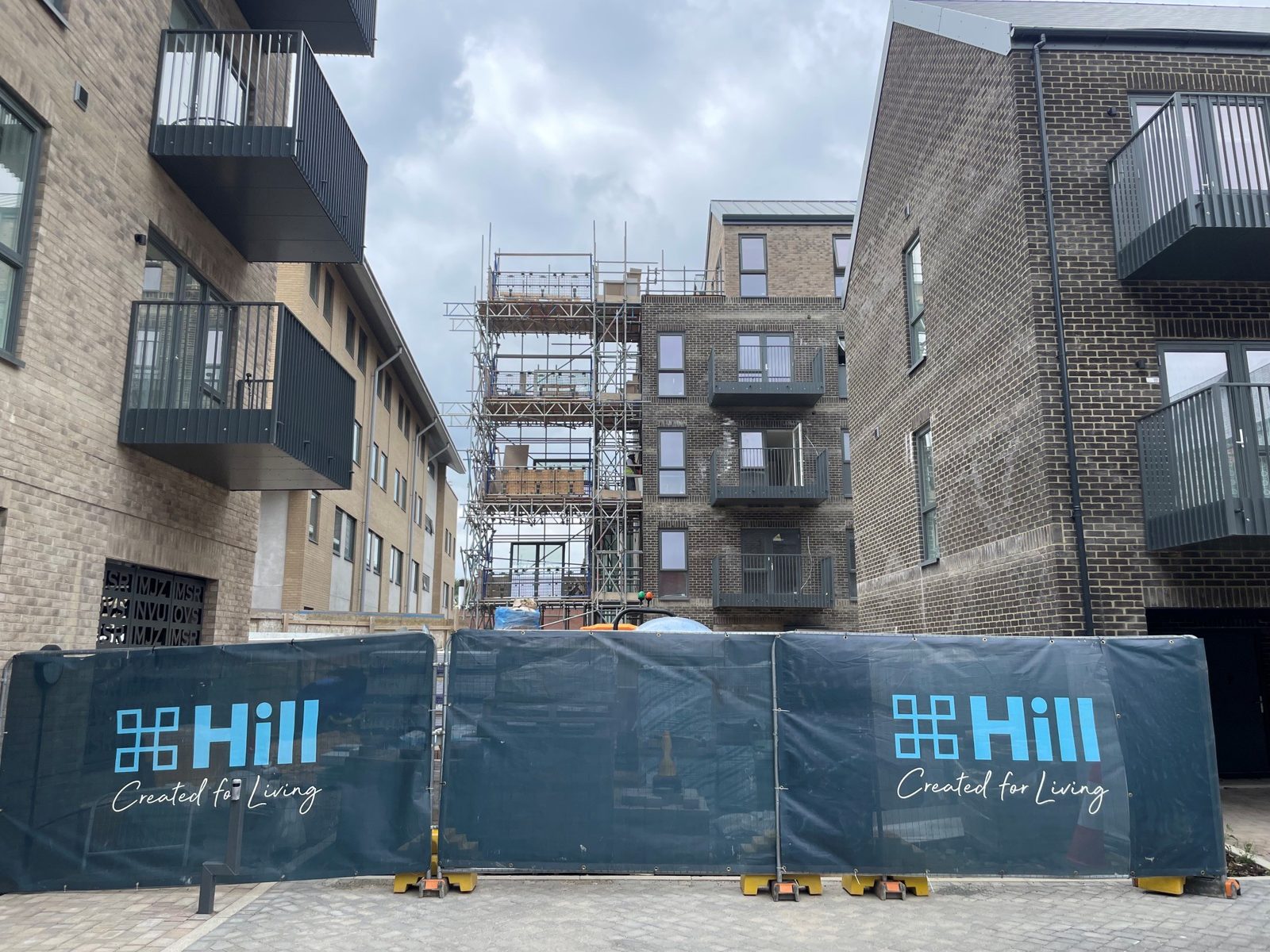
The developers we need are disappearing
The supply side is under strain at every scale. In 1988, more than 12,000 small and medium-sized builders delivered four in ten new homes. By 2017 there were around 2,500, delivering 12%. Connells Group reports that new housebuilding start-ups remain well below their 2022 peak, and administrations are up 21%.
The large housebuilders are struggling too. Profits across the major listed firms are forecast to fall by 12% this year. Berkeley Group has stopped buying land, and Vistry, the largest partnerships housebuilder, has lost more than 80% of its value in two years.
Build to rent has become an important part of flat delivery, particularly in city centres. More than 156,000 build-to-rent homes have been completed across the UK, most of them apartments, and institutional investment allows whole schemes to start without relying on individual sales. Indigo at Northminster in Peterborough shows how it can work, with Cross Keys Homes delivering 315 homes at no more than 80% of market rent, supported by £12.5 million from the Combined Authority. Build to rent complements ownership, and it is slowing too. Starts outside London fell by 84% in the year to June 2026.

Our work on the Greater London Authority’s Small Sites Small Builders programme showed that a healthy housing market needs developers and investors of different sizes, skills and approaches. Flats on brownfield sites in towns and cities are among the hardest homes to build, and they depend on that range of expertise. We are swiftly losing the capability to deliver a foundational component of our economic growth and success.
We are swiftly losing the capability to deliver a foundational component of our economic growth and success.
A system-based approach to get the chain moving
The housing system works as a chain, so the response has to treat it as one. Help for first-time buyers stalls if they cannot sell on later. Downsizing incentives achieve little if there is nothing suitable to move to. We are advocating a system-based approach, with each step designed to free up the next.
Stamp duty is central because it is a tax on movement, and it lands hardest when people most need to move. Wholesale reform is the best answer. Until then, the Treasury should target relief at the moves that free up the system. A blanket cut would largely be absorbed into higher house prices and give the wealthiest buyers more purchasing power.
Four steps for the Chancellor
1 Remove the barrier at the entry point.
The government’s Your First Home scheme, due to be set out in full in the Budget, is welcome. A 2.5% deposit and an initially interest-free 20% equity loan will help people without the bank of mum and dad onto the first rung. It is still help delivered as more borrowing, and it does nothing for the next move. The Chancellor should pair it with no stamp duty for first-time buyers and remove the £500,000 cliff edge that rules out much of London and the South East.
2 Make it affordable to move on.
Halve stamp duty for households selling a flat and moving on, within a value cap. That move releases a flat to the next first-time buyer.
3 Free up larger homes.
Nobody should be pushed out of their home. For those who want to downsize, the move should be worthwhile, or at least enticing. A stamp-duty saving on moves into new-build homes in town centres would do this, alongside the freedom to put released equity into a pension or an enhanced ISA allowance. Older households gain step-free homes near shops, health services and transport, and family homes return to the system for the families who need them.
4 Restore confidence in flats.
Buyers need to trust the product as well as afford it. The government should finish building safety remediation, make service charges transparent and predictable, and move new flats to commonhold so residents own and control their buildings. Developers and councils should design and approve flats that families want to stay in.
Flats are how town centres come alive
Flats bring residents into town centres, and residents keep high streets alive. They create footfall on weekday evenings as well as Saturday afternoons, support the café and the independent shop, and make streets feel safe after the shops close. In our work across towns and centres, the places that are recovering are the ones building a resident population.

When flats do not sell, those schemes stall, leaving vacant sites, empty upper floors and centres that go quiet after 6 pm. Many current local plans depend on flatted town-centre schemes to meet their housing numbers. If those schemes are not built, the plans fall short. The government and councils need to act now.
A joined-up answer to an old debate
Each of these ideas has been made before. Policy Exchange argued for lower stamp duty for older movers well before the pandemic. Radix has proposed a later-life relief, Berkeley Group has called for downsizer stamp duty to be capped at 1%, and Centre for London has argued for replacing stamp duty altogether.
What has been missing is a joined-up approach. The Treasury has rejected downsizer relief as a stand-alone tax break, arguing the savings are small and the cost significant. Judged as part of a system, the return is far greater. Every downsizer who moves sets off a chain of moves behind them.
The right homes, and the ones we already have
The government’s 1.5 million homes target is the right ambition. The headline number needs to include first homes in town centres, family flats in our cities and step-free homes for later life. Many of the homes people need already exist. Some 10 million households in England have two or more spare bedrooms.
Build the right homes, free up the ones we already have, and make flats a product people trust again. The Chancellor has said this Budget will move money and power into every postcode. Getting flats and town centres working again is one of the most direct ways to do that, and he can start on 28 October.